
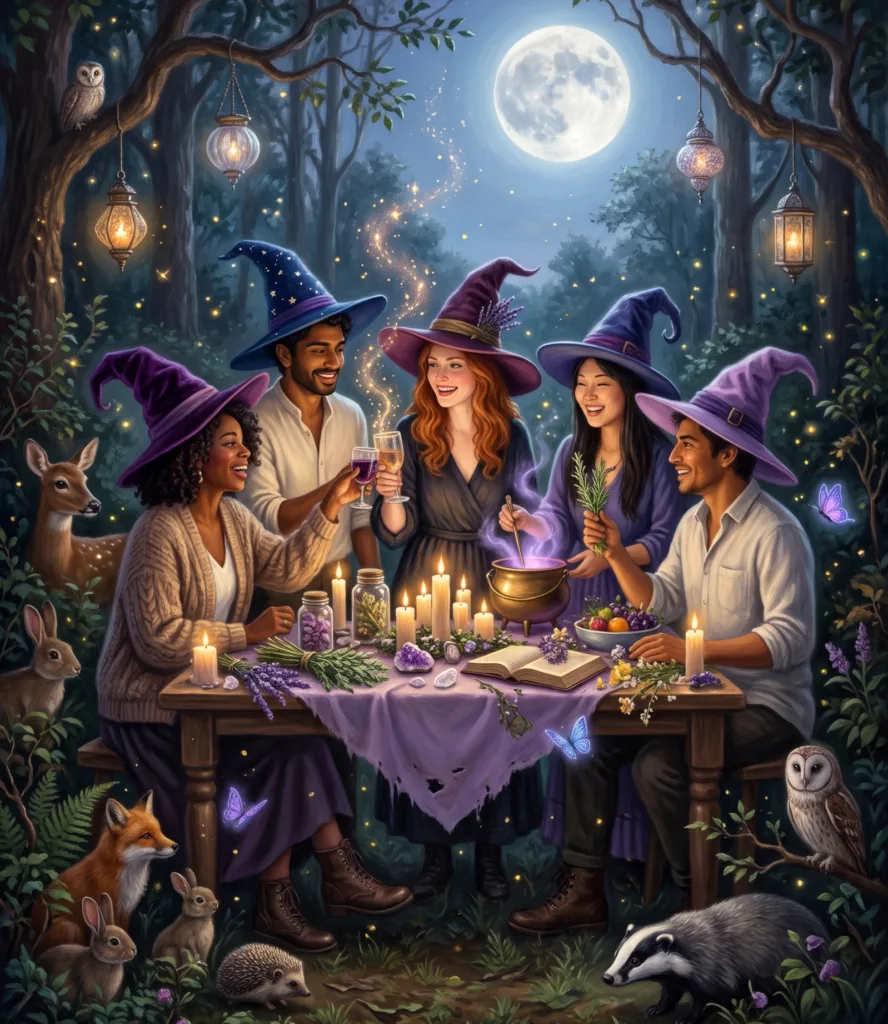
A coven is a group of witches or Wiccans who practice together, usually small, close-knit and meeting by the moon. If you want to join or start one, the best route is to join an established group first, or to begin with a small study group of two to five people who meet once a month. Before you commit to anything permanent, it helps to know the different kinds of groups out there.
Coven, Grove, Circle or Temple: What’s the Difference?
Pagan groups go by different names, and each one tells you something about who’s in it:
- Coven: a group of practicing witches or Wiccans. Coven names usually reflect the group’s beliefs, members or surroundings, such as “Coven of the Goddess” or “Coven of the Triple Moon.” Traditional Wiccan covens are often led by a High Priestess and High Priest and use initiation and degrees, while others are far more relaxed.
- Grove: generally a group of Druids. Groves are usually named after sacred places and objects, such as “Grove of the Ancient Forest” or “Grove of the Old Oak,” because trees and stones are sacred to Druids.
- Circle: a fairly generic term that can apply to any type of Pagan group, such as “Circle of the Willow Moon” or “Circle of the Great Goddess.”
- Temple: used for Pagan “churches,” such as “The Temple of Light” or “The Temple of the Sacred Oak.” It’s also a generic term that any religion can use.
Should You Join a Coven or Start Your Own?
Most people don’t begin by creating a coven right away. The best course of action is to join an existing group first. The only real way to learn how to run a group (or learn much at all, for that matter) is to join one that’s already well established. After you’ve been with the group a while, you can decide whether to go your own way or remain part of the family.
Unfortunately, it isn’t always possible to find a group in your area. In that case, a study group is the perfect place to begin. If your group later decides to expand, add new members or go separate ways, there are no ties holding anyone back. And if group practice isn’t for you, many witches stay solitary for life, and that’s a path in its own right.
How to Find a Coven Near You
Good places to look include local metaphysical shops, notice boards in Pagan-friendly bookshops, Pagan Pride Day events, Meetup groups and online Pagan communities. Many groups now meet online too, which is a great option if there’s nothing nearby.
Red Flags to Watch For in a Coven
A healthy coven never pressures you. Walk away from any group that:
- asks for large sums of money to join or to learn
- demands that you keep secrets from your friends and family
- pressures you into nudity, sex or anything that makes you uncomfortable
- discourages you from questioning the leader
When you first meet people from online, meet somewhere public, and let someone know where you’re going.
How Big Should a Coven Be?
Groups should stay small. Two to five people is a good size for a beginning group, and you can always add more members if anyone wants to join. Traditionally, a coven is said to have no more than 13 members.
To start with, everyone should be on the same level, meaning you should all be reading the same books. Choose a book that suits the level you’re all learning at. You might decide to read one book a month or so. A good beginner book is Raymond Buckland’s Complete Book of Witchcraft.
Where Should Your Coven Meet?
If you’re beginning a group, you’ll also need a place to meet. Some groups meet indoors at a member’s home, but many choose to meet outdoors, somewhere they feel comfortable and can commune with nature. Public parks are perfect: everyone can lie in the grass or on blankets and get comfortable. If it rains, most parks have a covered picnic area where you can carry on with your meeting. Areas with water or trees are particularly nice. Check the park’s rules before lighting candles or incense, as many don’t allow open flames.
When Should Your Coven Meet?
Next, decide when you’ll meet. Most groups meet once a month on the Esbats, the full moon (and for some groups the new moon), and many also gather for the eight Sabbats of the Wheel of the Year. That won’t suit everyone’s schedule, so you might choose a fixed day instead, such as the first Saturday of every month. Keep the meeting time the same every time so that no one gets confused or forgets.
Set up a group chat so everyone can get in touch if plans change, a meeting is canceled, or someone can’t make it.
What to Do at Coven Meetings
Most importantly, you’ll need to decide what happens at each meeting. No one will want to come if everyone just sits around not knowing what to do. Here are some ideas to get you started.
Share Food
A good practice when gathering is for everyone to bring something to eat, and each person should bring something different. For example, one person brings drinks, one brings a bag of chips, one brings dessert, and another is in charge of sandwiches. I like making turkey sandwiches with lettuce and ranch dressing, cut into quarter triangles with the crust cut off. Everyone loves these little club sandwiches! Just check for allergies and dietary needs first.
Sharing food is a witchy tradition in itself: many rituals end with cakes and ale, a shared bite and drink to ground everyone after the magick.
Read and Discuss
Decide what everyone should read before each meeting, then discuss it together next time. You can also have each person find an article or poem about witchcraft, read it aloud to the group, and hand out a copy to everyone. Punch holes in the sides so everyone can keep them in their own group Book of Shadows.
Practice Rituals and Spells
If you like, you can begin and/or end each session with a group prayer or a spell. Rituals are an important part of coven life, so regular meetings are the perfect time to practice them, from casting a circle together to working a spell as a group.
Celebrate With Crafts and Games
You may want to bring crafts or games into your meetings, especially around a holiday. Some activities are perfect for groups, such as pumpkin carving at Samhain or a gift exchange at Yule.
Rotate the Jobs
Assign different tasks and rotate them, so one person has a job for a month and someone else takes it the next. Rotating jobs means everyone gets a chance at each role. Example jobs include the leader (who decides what will happen and when) and the secretary (who writes down everything done at the meeting).
Originally written by Amber S, Wiccanspells.info 2011

Want to understand how you're wired to manifest?
Most manifestation advice is generic. Your birth chart isn't. Here’s the thing: everyone can manifest their desires – you just need the right guide.Your custom Astro-Magick Blueprint uses your unique birth chart to:- Find your unique manifestation style.
- Uncover your natural superpowers and hidden blocks.
- Discover what your soul is truly here to call in.
- Give you a personalised roadmap - not one-size-fits-all advice.


